
India expects partners to understand its policy of 'zero tolerance' against terrorism, and it will never countenance 'perpetrators of evil' being put on par with its victims, External Affairs Minister S Jaishankar said on Saturday during extensive talks with his British counterpart David Lammy.
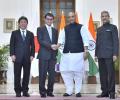
The India-Japan 2+2 dialogue added strategic heft to the special relationship in the wake of growing Chinese assertiveness on regional affairs, points out Dr Rajaram Panda.
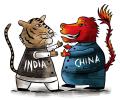
India and China have announced a series of measures aimed at improving their relationship, including maintaining peace along the border, reopening border trade, and resuming direct flights.
The 17 rare earth elements that are at the centre of the current crisis are critical components of everyday products -- from cars to jet engines to electronics like smartphones and flat-screen TVs.

The Galwan clashes indicate to the limitations in relations if they do not address border stability, points out Srikanth Kondapalli.
The Galwan clashes indicate to the limitations in relations if they do not address border stability, points out Srikanth Kondapalli.

In a statement after a meeting between Trump and Pakistan Army chief Asim Munir at the White House on Wednesday, the Inter-Services Public Relations -- the media wing of the Pakistan Army -- said they also discussed joint counterterrorism efforts.
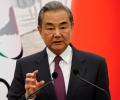
China on Tuesday called for a 'comprehensive and lasting ceasefire' between India and Pakistan, urging both countries to properly handle their differences through dialogue.

'India has gone some way to meeting its objectives because it has established a deterrent value that Pakistan will have to take into account when it plans future terrorist attacks.'

US Secretary of State Michael Pompeo and Defence Secretary Mark T Esper will visit India on October 26 and 27 for the high-level dialogue aimed at further boosting defence, security and global strategic ties between the two countries.
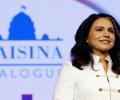
'Pick up momentum and find opportunities from an intelligence-sharing standpoint.'
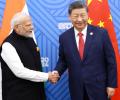
Chinese President Xi Jinping on Wednesday pledged to strengthen the strategic relationships with neighbouring countries by 'appropriately' managing differences and enhancing supply chain ties as China's tariff war with the United States escalated.

The post further read that "at a moment of heightened regional turbulence", President Trump "demonstrated great strategic foresight and stellar statesmanship through robust diplomatic engagement with both Islamabad and New Delhi," Dawn reported.
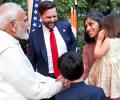
Prime Minister Narendra Modi and US Vice President JD Vance have expressed satisfaction with the progress made in negotiations for a bilateral trade agreement. The two leaders met in New Delhi and discussed a range of bilateral issues, including cooperation in energy, defense, strategic technologies, and other areas. They also exchanged views on regional and global issues of mutual interest.
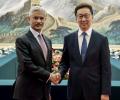
India and China should build on 'good progress' in normalising the bilateral ties to address border-related issues including de-escalation, and it is essential to avoid 'restrictive trade measures and roadblocks', External Affairs Minister S Jaishankar said on Monday during talks with his Chinese counterpart Wang Yi.
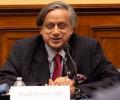
Tharoor said if Pakistan were to dismantle the infrastructure of terrorism, "we can talk to them".

"It is still not too late. India must speak clearly, act responsibly, and use every diplomatic channel available to defuse tensions and promote a return to dialogue in West Asia," Gandhi asserted.
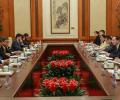
In the talks, China emphasised that the two sides should proceed from the fundamental interests of China, India and adhere to the strategic height and long-term perspective of China-India relations, the readout said.

He said China has accrued significant capacities for force mobilisation, application, and sustenance of military operations and maintained the long-pending boundary issue can not be divorced from bilateral relations between the two Asian giants.

In their first structured bilateral talks in nearly five years, Prime Minister Narendra Modi and Chinese President Xi Jinping Wednesday agreed that India and China can have a 'peaceful and stable' relationship by displaying maturity and mutual respect and endorsed the pact on the resolution of the dragging eastern Ladakh border row.
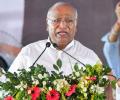
Congress president Mallikarjun Kharge on Saturday accused the government of misleading the nation on the India-Pakistan conflict and demanded holding a special session of Parliament immediately, following Chief of Defence Staff General Anil Chauhan's acknowledgement of aircraft loss in the hostilities.
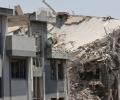
An inconclusive end to this war will pose high risk for Netanyahu of a cascading demand for a regime change in Israel, predicts Ambassador M K Bhadrakumar.

United States Secretary of State John Kerry will arrive in New Delhi on July 30 on a three-day visit during which he will hold talks with Indian leaders on a range of key bilateral, regional and global issues of mutual interest besides co-chairing the fifth India-US Strategic Dialogue.

One Iranian woman, who is the wife of an Indian national has also been evacuated, he added.
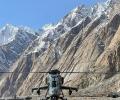
Defence sources stated that the disengagement involves removing infrastructure and withdrawing troops from both sides. The process is expected to be completed by Tuesday.

Jimmy Carter, the 39th US president and a champion of peace and human rights, has died at the age of 100. Carter, who was known for his work with the Carter Center, promoting democracy and conflict resolution, was also a close friend of India. He visited the country in 1978, forging a lasting relationship between the two nations.
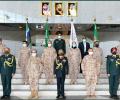
'The attacks made clear to all the Gulf States that Pakistan was the nursery and sanctuary of extremist violence and that this violence threatened all the countries in the region.'

Australian Foreign Minister Marise Payne and Defence Minister Peter Dutton from the Australian side will meet with External Affairs Minister (EAM) S Jaishankar and Defence Minister Rajnath Singh.
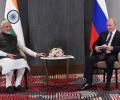
The phone conversation came days after it emerged that Modi will not be travelling to Russia for the annual India-Russia summit this year.
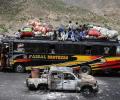
'No military offensive by Pakistan will end the insurgency in Balochistan without simultaneous, concerted efforts toward political dialogue to de-escalate tensions.'
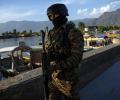
The 'mediation' by the United States from behind the scene on the diplomatic track appears to be once again working, which calls on both Delhi and Islamabad to show restraint and pull back from a military confrontation, notes Ambassador M K Bhadrakumar.

The fourth Strategic Dialogue between India and United States next week would set the tone of engagement between the two countries during the second term of President Barack Obama, eminent American experts have said.
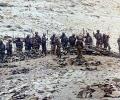
In the 15-year dataset, the researchers noted an average of 7.8 incursions per year even though the Indian government's estimates are much higher.

In his opening remarks at the talks, Defence Minister Rajnath Singh asserted that India is confident of overcoming the challenges with a strong political will and an inherent capability of its people.
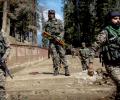
China hopes both sides will remain restrained, move toward each other, and work together to de-escalate the situation.

The composition of the US delegation led by Secretary of State Hillary Clinton to next week's India-US Strategic Dialogue in New Delhi points to the wide-ranging scope of talks between the two countries.

'While my generation carries with it the memory of the Chinese perfidy of 1962, this generation will carry the memory of Chinese perfidy in Galwan.'

The compulsion behind India and Japan to deepen security cooperation is in response to China's growing political and economic clout and its assertive behaviour in disputed areas. This has been the key driver for bringing both India and Japan closer in the domain of security cooperation, explains Dr Rajaram Panda.
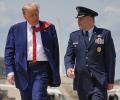
He then went on to say that, however, he won't get a Nobel Peace Prize for any of his efforts.
In the wake of the recent hostilities, both sides have moved from weapons to words, with India dispatching several delegations to visit more than 30 capitals across the world. A similar effort by Pakistan is set to start on Jun 2.
